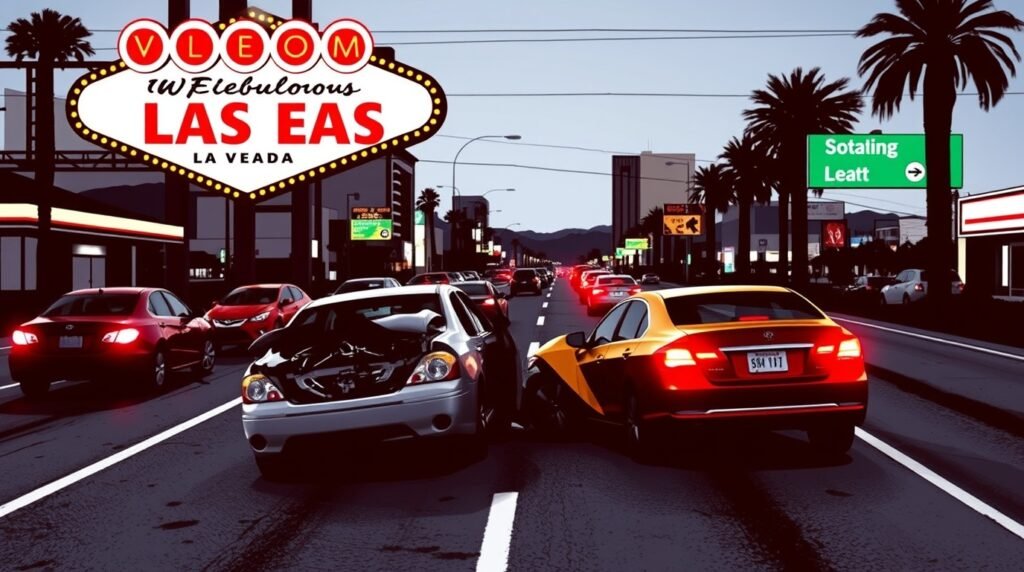
Las Vegas isn’t like most American cities when it comes to traffic safety, and that difference shows up directly in the crash data. Understanding the common car accidents in Las Vegas means looking past the usual “speeding and drunk driving” checklist that most articles stop at. It means looking at when crashes happen, where they cluster, and who is behind the wheel — because in a city built around tourism, nightlife, and 24/7 traffic, the patterns don’t match the rest of the country.
This guide breaks down the common car accidents in Las Vegas by cause, by crash type, by location, and by the factors unique to a tourist-heavy desert city — things most local guides skip entirely.
Why Las Vegas Traffic Patterns Are Different
In most U.S. cities, daytime hours produce the highest number of collisions because that’s when traffic volume peaks. Las Vegas flips that pattern. Because the city runs on a 24-hour economy — casinos, shows, nightlife, and shift workers — nighttime traffic volume stays high long after other cities have gone quiet. That means a meaningful share of common car accidents in Las Vegas happen after dark, often involving drivers who have been drinking, are fatigued from long shifts, or are tourists unfamiliar with the roads. www thestripesblog .com
This single fact changes how prevention should be approached. Safety campaigns built around “daytime distracted driving” don’t address the reality of Las Vegas roads after 10 p.m., when Strip corridors, party-goers, and impaired drivers create a very different risk profile.
Common Causes Behind Car Accidents in Las Vegas
The causes behind common car accidents in Las Vegas aren’t unique in name, but the way they play out locally is. Below is a breakdown of the leading factors.
Failure to Yield
Failure to yield is consistently cited as a leading cause of serious and fatal crashes in the city. It happens when a driver ignores right-of-way rules at an intersection, crosswalk, or merge point. Because Las Vegas has wide boulevards, multi-lane turns, and heavy pedestrian crossings near the Strip, failure-to-yield incidents frequently produce T-bone and side-impact collisions rather than minor fender benders.
Speeding
Wide, straight roads with high posted speed limits — combined with a driving culture that treats Las Vegas as an open highway — make speeding one of the most consistently cited common car accidents in Las Vegas causes. Speeding reduces reaction time and increases the severity of nearly every other crash type on this list, from rear-end collisions to rollovers.
Impaired Driving
Given the city’s nightlife economy, impaired driving plays an outsized role in common car accidents in Las Vegas compared to national averages. Alcohol-related crashes spike heavily on weekends, near the Strip, and during major events, when both residents and visitors are more likely to get behind the wheel after drinking.
Distracted Driving
Distracted driving covers more than texting — eating, adjusting navigation apps, or interacting with rideshare passengers all count. In stop-and-go traffic near casinos, resorts, and convention centers, distracted driving is a frequent trigger for rear-end collisions.
Drowsy Driving
Because Las Vegas runs on shift work and late-night entertainment, drowsy driving is a bigger factor here than in cities with more traditional daytime traffic patterns. Casino and hospitality workers commuting home in the early morning hours are a recurring presence in local crash reports.
Aggressive Driving
Tailgating, weaving through lanes, and abrupt lane changes are common on I-15 and US-95, especially during rush hour and event traffic. Aggressive driving compounds the risk from speeding and failure to yield, often turning a minor traffic conflict into a multi-vehicle collision.
Common Types of Car Crashes in Las Vegas
Beyond causes, it helps to understand which physical types of collisions occur most often. The table below maps common car accidents in Las Vegas by type, typical cause, and where they most often occur.
| Crash Type | Typical Cause | Common Location |
|---|---|---|
| Rear-end collision | Distracted driving, sudden stops | Strip traffic lights, freeway on-ramps |
| T-bone (side-impact) | Failure to yield, running red lights | Major intersections (Sahara & Decatur, Flamingo & Rainbow) |
| Head-on collision | Impaired or drowsy driving, wrong-way entry | Surface streets, late-night hours |
| Rollover | Speeding, sudden swerving, tire blowout | I-15, US-95 high-speed corridors |
| Parking lot collision | Low visibility, distracted backing out | Casino and shopping center lots |
| Pedestrian/cyclist collision | Failure to yield, poor lighting | Strip crosswalks, tourist corridors |
| Multi-vehicle chain-reaction | Aggressive driving, sudden braking | I-15 and US-95 during rush hour |
Rear-end collisions and T-bone crashes make up the bulk of common car accidents in Las Vegas, but rollovers and pedestrian collisions tend to produce the most severe injuries, which is worth noting for anyone assessing personal risk on these roads.
High-Risk Locations for Car Accidents in Las Vegas
Certain intersections and corridors see a disproportionate share of collisions. Knowing these locations matters just as much as knowing the causes, since geography shapes how common car accidents in Las Vegas actually unfold.
Frequently cited high-risk locations include:
- Sahara Avenue and Decatur Boulevard — a heavy mix of local and visitor traffic
- Flamingo Road and Rainbow Boulevard — high pedestrian activity near resorts
- Interstate 15 — high-speed multi-vehicle and rollover risk
- US-95 — heavy commuter volume, frequent chain-reaction crashes
- The Las Vegas Strip corridor — dense pedestrian crossings, rideshare pickup/drop-off congestion
These locations combine the elements that drive up crash frequency: high traffic volume, mixed pedestrian and vehicle activity, and drivers who are often unfamiliar with the roads.
Tourists, Rideshare, and Rental Cars: An Overlooked Risk Factor
Most breakdowns of common car accidents in Las Vegas focus only on local driving behavior, but Las Vegas has a risk factor most cities don’t: a massive, constantly rotating population of out-of-town drivers.
Tourists in Rental Cars
Visitors unfamiliar with local road layouts, lane configurations, and Strip traffic patterns are more likely to misjudge turns, brake unexpectedly, or hesitate at merges — all of which contribute to collisions, especially near resorts and the airport corridor.
Rideshare Congestion
With one of the highest rideshare densities in the country, Las Vegas sees frequent double-parking, sudden stops, and unsafe pickup/drop-off maneuvers near casinos and entertainment venues. These situations regularly trigger rear-end collisions and low-speed but high-frequency crashes.
Event-Driven and Seasonal Spikes
Crash frequency in Las Vegas isn’t constant throughout the year — it spikes around specific events and weather conditions, another layer most coverage of common car accidents in Las Vegas leaves out.
Factors that drive short-term spikes:
- Major conventions and trade shows bringing surges of unfamiliar drivers
- Holiday weekends and New Year’s Eve, with increased impaired driving
- Large-scale events like concerts, fights, or motorsport weekends
- Monsoon season flash flooding and dust storms, which reduce visibility and create slick roads
- Construction zones tied to ongoing Strip and freeway projects, which narrow lanes and reduce reaction time
Weather deserves particular attention in a desert city: wet pavement plays a bigger role than most drivers expect, since Las Vegas roads aren’t built to shed water as efficiently as roads in wetter climates.
Prevention Tips Based on Local Crash Patterns
General safety advice doesn’t account for Las Vegas-specific risks. These tips are matched directly to the causes and patterns outlined above.
- Increase following distance on the Strip and near intersections to reduce rear-end and T-bone risk.
- Avoid driving during late-night and early-morning hours when possible, since this is when impaired and drowsy driving incidents rise sharply.
- Double-check crosswalks and pedestrian zones near resorts, especially in low-light conditions.
- Slow down on I-15 and US-95 during high winds or rain, since wet pavement significantly raises rollover and skid risk.
- Watch for sudden stops near rideshare pickup zones, particularly outside casinos and event venues.
- Plan extra time during major conventions or events, when traffic volume and unfamiliar drivers both increase.
- Treat construction zones as high-risk areas, not just inconveniences — narrowed lanes and poor lighting compound existing hazards.
Summary Table: Common Car Accidents in Las Vegas at a Glance
| Factor | Key Insight |
|---|---|
| Peak risk time | Nighttime, unlike most U.S. cities |
| Leading cause | Failure to yield and speeding |
| Most frequent crash type | Rear-end collisions |
| Highest-severity crash type | Rollovers and pedestrian collisions |
| Highest-risk corridors | I-15, US-95, Strip intersections |
| Overlooked risk group | Tourists and rideshare drivers |
| Seasonal risk factor | Monsoon rain and dust storms |
Frequently Asked Questions
What is the most common car accident in Las Vegas?
Rear-end collisions are the most frequently reported type, typically caused by distracted driving or sudden stops in heavy Strip and freeway traffic.
What time of day do most car accidents happen in Las Vegas?
Unlike most U.S. cities, Las Vegas sees a higher share of crashes at night, driven by the city’s 24-hour nightlife and shift-work traffic patterns.
Which intersections in Las Vegas have the most accidents?
Sahara Avenue at Decatur Boulevard and Flamingo Road at Rainbow Boulevard are consistently cited as among the highest-collision intersections in the city.
Are tourists more likely to be involved in car accidents in Las Vegas?
Yes — unfamiliarity with local roads, rental car use, and Strip traffic congestion make tourists a notable risk factor in local crash patterns.
Does weather affect car accidents in Las Vegas?
Yes — despite being a desert city, wet pavement during rain and monsoon season significantly increases skid and rollover risk on major roads.
What role does impaired driving play in Las Vegas crashes?
Impaired driving remains one of the leading contributors to fatal and injury crashes in the city, particularly on weekends and near nightlife districts.
Are rideshare vehicles a factor in Las Vegas car accidents?
Yes — sudden stops, double-parking, and unsafe pickup/drop-off maneuvers near casinos and venues contribute to a steady share of low-speed collisions.